What We’re About
Breaking the Silence on Domestic Violence
Domestic violence remains one of the most pervasive forms of violence in the United States. According to the National Coalition Against Domestic Violence (NCADV), approximately 1 in 4 women and 1 in 9 men experience severe intimate partner violence in their lifetime. Millions of survivors endure stalking, threats, coercive control, psychological manipulation, and financial abuse that can continue long after a relationship ends.
The consequences extend far beyond the relationship itself. Survivors frequently face long-term trauma, safety concerns, economic instability, and the difficult process of seeking protection through legal systems that may not always recognize the full scope of coercive control.
For many survivors, the abuse does not end when the relationship ends. Instead, it evolves — appearing through intimidation, harassment, reputational attacks, and efforts to manipulate institutions designed to protect victims.
The Silence Around Lesbian Domestic Violence
While domestic violence affects people across all communities, survivors in same-sex relationships often face additional barriers to recognition and support. Research from the Centers for Disease Control and Prevention (CDC) indicates that lesbian and bisexual women report some of the highest lifetime rates of intimate partner violence. Yet lesbian domestic violence remains significantly underreported and under-discussed.
Many survivors describe a culture where speaking openly about abuse is discouraged out of fear that it may:
• harm the reputation of the LGBTQ community
• reinforce harmful stereotypes
• create division within advocacy spaces
As a result, survivors may feel pressure to remain silent — even when their safety is at risk. Silence protects offenders. Accountability protects survivors.
Acknowledging domestic violence within LGBTQ spaces is not an attack on the community. It is an act of protection and care. Research consistently shows that LGBTQ individuals experience intimate partner violence at significant rates. According to the Centers for Disease Control and Prevention (CDC), approximately 44% of lesbian women and 61% of bisexual women report experiencing rape, physical violence, or stalking by an intimate partner during their lifetime, compared to 35% of heterosexual women.
Despite these realities, many LGBTQ survivors remain silent about abuse. Research from the National Coalition of Anti-Violence Programs (NCAVP) and other advocacy organizations has found that LGBTQ survivors frequently face additional barriers to reporting violence, including fear of community backlash, concern about reinforcing harmful stereotypes, distrust of law enforcement, and the belief that their experiences will not be taken seriously.
In some studies of LGBTQ survivors, a majority reported hesitation to report abuse or seek help because of these concerns, illustrating how community silence and systemic barriers can compound the trauma survivors already face.
These realities do not weaken the LGBTQ community. They underscore the importance of ensuring that all survivors — regardless of identity — are safe, heard, and supported.
Litigation Abuse: When Legal Systems Become Tools of Control
Another pattern increasingly recognized by domestic violence experts is litigation abuse.
Litigation abuse occurs when individuals use legal systems to intimidate, exhaust, or silence victims rather than to resolve legitimate disputes. These tactics may include:
• filing repeated legal actions designed to overwhelm survivors
• using public filings to spread damaging allegations
• attempting to control the narrative through legal threats or pressure
• prolonging legal conflict in ways that financially or emotionally drain victims
Advocates describe litigation abuse as an extension of coercive control, where the abuse shifts from private spaces into institutional systems. For survivors, this phase can be particularly isolating because the systems meant to provide protection can sometimes become arenas where manipulation continues.
Retaliation, Smear Campaigns & Community Pressure
Domestic violence experts recognize that abuse frequently extends beyond the relationship itself. Survivors and witnesses may face retaliation for speaking openly about abuse. Individuals connected to this documentary and advocacy work have described experiences including:
• online harassment and smear campaigns
• threats directed toward careers or businesses
• pressure to withdraw public support for survivors
• attempts to manipulate narratives within community spaces
These behaviors are widely recognized by researchers and advocates as forms of coercive control, designed to isolate victims and discourage others from speaking. When intimidation spreads into professional or community spaces, it can create an environment where survivors feel they must choose between their safety and their social belonging.
Power, Influence & Living Under Threat
Domestic violence often intersects with broader questions of power and influence.
During the relationship, and post PFA my abuser repeatedly stated that myself and friends needed to be “on the right side of the law” and that they “knew the right people.” And that they were with the “gay mafia”.
Statements like these function as tools of intimidation. They create fear that systems designed to protect victims may instead be influenced or manipulated.
In smaller states or tightly connected communities — where political, professional, and personal networks often overlap — survivors may face a troubling question:
Is accountability determined by the law — or by who someone knows?
Some survivors have expressed concerns when individuals with public influence appear to align with or defend people who have documented histories of violence.
Transparency matters. Public trust in legal and political institutions depends on it.
Public Accountability & Community Transparency
Recent reporting in the Cape Gazette has examined aspects of domestic violence cases, legal proceedings, and community responses within the region. These articles highlight how cases of violence and accountability can intersect with broader public conversations about safety, justice, and leadership.
Public reporting plays an important role in ensuring transparency and encouraging communities to confront difficult realities rather than ignore them.
When domestic violence cases become part of the public record, they raise necessary questions about how institutions respond and how communities protect survivors.
Part one: Litigation abuse is unchecked in Delaware domestic violence cases | Cape Gazette
Part two: The unspoken side of domestic violence | Cape Gazette
Why This Work Exists
A Safe Space To Land exists to break silence around domestic violence, document survivor experiences, and examine how systems respond when abuse intersects with power, influence, and community dynamics.
Survivors deserve more than private sympathy. They deserve:
• safety
• transparency
• accountability
• and systems that prioritize protection over reputation
Breaking silence is not betrayal. It is the beginning of justice.
Founder & Creator, A Safe Space To Land
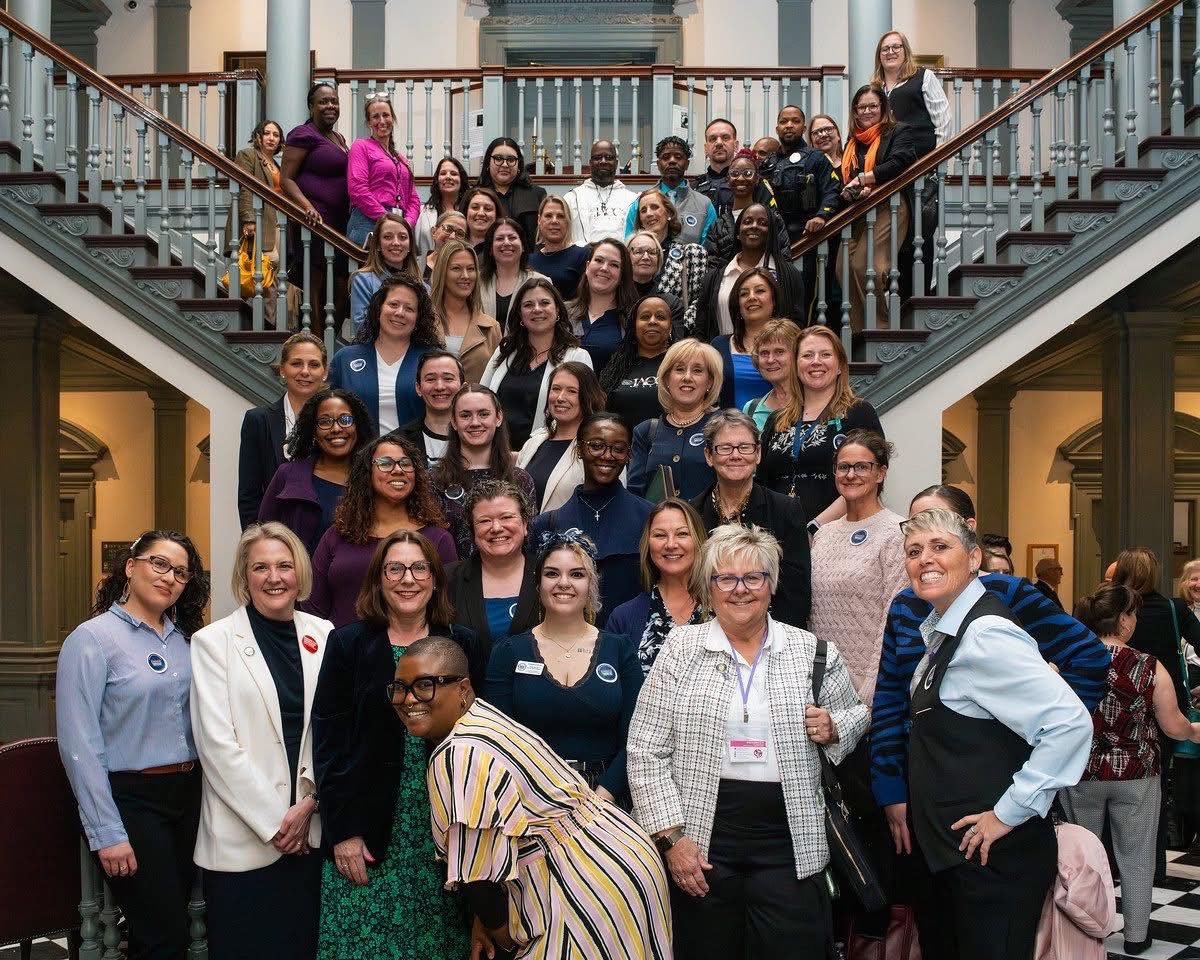
Official Photo taken during Victims Crime Week 2025 Legislative Hall Dover, DE; shared by office of the Governor and the DVVC

April 21st, 2023 Stand Up Against Domestic Violence Rally organized by Patty Rickman, and Susan Canfora.
Patty D. Rickman
is the founder and creator of “A Safe Space To Land”, a survivor advocacy initiative dedicated to supporting individuals affected by domestic violence through education, awareness, and community engagement.
Patty is also the author of the forthcoming book “A Safe Space To Land” and the executive producer of the documentary project of the same name. Patty’s commitment to this work is deeply personal. In April 2022, after surviving domestic violence, she sought protection through a Protection From Abuse (PFA) order. Rather than allowing her experience to remain a private struggle, she transformed it into a mission focused on advocacy, awareness, and systemic reform to ensure that survivors have access to support, resources, and a voice within their communities.
Since that time, Patty has become an active voice within the domestic violence advocacy community in Delaware and beyond. She has participated in numerous training programs and survivor-support initiatives designed to strengthen community responses to domestic violence. Patty completed advocacy training through the Stalking Prevention, Awareness, and Resource Center (SPARC) and, after contributing more than 500 hours of volunteer service, earned her Peer Support Certification in Delaware in 2025, equipping her to provide trauma-informed guidance and peer support to survivors navigating complex circumstances.
Patty graduated magna cum laude from Georgian Court University in 2016 with a Masters degree in Holistic Health Studies, where her academic training focused on trauma awareness, wellness, and integrative approaches to healing — principles that continue to shape her survivor-centered advocacy and community work today.
Between 2023 and 2025, Patty volunteered with domestic violence transitional housing programs in Sussex County, Delaware, assisting organizations that provide shelter and stability to individuals leaving abusive environments. From December 2024 through October 2025, she served as a Case Manager contracted employee, where she worked directly with individuals navigating challenging life circumstances and accessing community resources.
Patty has also played an active role in legislative advocacy. In March 2025, she testified at Legislative Hall in Dover, Delaware, in support of Senate Bill 17 (SB17) — legislation designed to strengthen protections for survivors of domestic violence. She participated in advocacy efforts surrounding the bill’s passage, wrote letters to legislators supporting the legislation, and was present at the official signing of the law.
Her advocacy work extends into public awareness and community engagement. Patty has spoken at rallies, volunteer events, and advocacy gatherings focused on survivor safety and systemic accountability. In April 2023, she organized and hosted a Stand Up Against Domestic Violence Rally at Georgetown Circle in Sussex County, bringing community members together to raise awareness and support survivors. The event received recognition and letters of support from Governor John Carney, U.S. Senator Chris Coons, and the Delaware Victims’ Center.
From 2024 through 2026, Patty participated in the Sussex Pride Anti-Violence Project, supporting initiatives focused on addressing domestic violence within LGBTQ communities and expanding conversations around survivor safety.
Her advocacy has contributed to broader public conversations about stalking, coercive control, and litigation abuse. In 2025, her advocacy efforts helped inspire a two-part editorial series published by the Cape Gazette highlighting litigation abuse and raising awareness about the challenges survivors can face when navigating legal systems.
Patty’s work has been featured in newspaper articles, podcasts, and radio programs, where she speaks about domestic violence awareness, survivor advocacy, and systemic reform. She has also participated in numerous charitable and community fundraising initiatives throughout Sussex County aimed at supporting survivors and raising awareness about domestic violence.
Patty is also the co-host of the podcast “She Who Speaks With Fire,” alongside her co-host Di Pine, owner and founder of Diadem Medicine. Available on Spotify and other platforms, the podcast centers on empowerment, advocacy, and social justice issues affecting survivors. Through trauma-informed conversations and open Q&A discussions, Patty and Di work to promote healthy relationships within the LGBTQ community while fostering safe spaces for dialogue, education, healing, and overall well-being.
Through her leadership of A Safe Space To Land, Patty Rickman continues to transform personal experience into public purpose — working to ensure survivors have access to support, resources, and compassionate guidance as they reclaim safety, dignity, and voice.
Website Content and Source Notice
The content of this website reflects the personal experiences, opinions, advocacy work, research, and observations of its author.
Photographs, screenshots, public records, government publications, publicly distributed materials, social media content, and other referenced materials appearing on this website are believed to have been obtained from publicly available sources or lawfully acquired records and materials.
The appearance of any individual, public official, advocate, volunteer, organization, agency, business, or community member in photographs, documents, or referenced materials does not imply endorsement, sponsorship, approval, authorization, partnership, or affiliation with this website unless expressly stated.
References to individuals, organizations, public events, advocacy efforts, volunteer activities, or community initiatives are provided for informational, educational, historical, commentary, public awareness, or advocacy purposes.
To the best of the author's knowledge and belief, factual statements contained on this website are based upon personal knowledge, publicly available information, documentation, records, and sources believed to be reliable at the time of publication.
This website is maintained in good faith and reflects the author's understanding of events based upon personal knowledge, documentation, and publicly available information at the time of publication.
Media & Press
Coastal Point Article written by: Susan Canfora
Long Neck woman aims to shine light on domestic violence | News | coastalpoint.com
I’m a survivor Pod Coast hosted by: Mitsy Chaviers
Special Guest Patty Rickman - I’m a Survivor Podcast - Apple Podcasts
The Hard Talk With Jakim: Pitfalls in Delaware Court System
Delmarva Today WESM Hosted by: Don Rush “Domestic Violence Survivors Rally In Georgetown”
WMDT by: Hannah Cechini “Local entrepreneur, mom shares story of surviving LGBTQ+ domestic violence”
Cape Gazette: Cornhole tournament to benefit Domestic Violence Survivors
Cape Gazette: Litigation Abuse two part series written by Ellen Mcintyre
Part One: Litigation abuse is unchecked in Delaware domestic violence cases | Cape Gazette
Part two: The unspoken side of domestic violence | Cape Gazette
The Hard Talk With Jakim with Domestic Violence Survivor and Author Patty Rickman
https://youtu.be/60E8yf8wYBM?si=F3-IAFT4RNP6lPLF
Domestic Violence Survivors rally in Georgetown for awareness, say Sussex County needs more resources
Domestic Violence survivors rally in Georgetown for awareness, say Sussex County needs more resources | Delaware Public Media by Rachel Sawicki
Delmarva Today Domestic Violence in LGBTQ Community with Bryan Russo, Susan Canfora, and Patty Rickman
Delmarva Today 4-21-23 (Part 1) Domestic Violence in LGBTQ Community